Impedance-based diagnostics assess battery performance for lithium battery systems, including fluctuating temperature environments. With analyzing the impedance response of the battery across multiple frequencies, valuable insights can be determined regarding the internal resistance, charge transfer kinetics, and overall stability of the lithium-ion battery system. Specifically, EIS testing can help to quantify the impact on temperature fluctuations on key characteristics such as electrode polarization resistance, ionic conductivity, and double layer capacitance.
- Additionally, EIS data can be used to pinpoint potential failure mechanisms connected to thermal stress, enabling the development of strategies for optimizing battery structure and improving their overall durability.
- The information is crucial for ensuring the safe and consistent operation throughout lithium-ion batteries in a wide range spanning applications, including electric vehicles, portable electronics, and energy storage systems.
Rapid Degradation Assessment of Lithium Batteries: A Comprehensive Analysis
Li-ion power many modern devices, demanding rigorous testing to ensure their reliability and longevity. ADT constitutes a central assessment approach for simulating the outcomes of prolonged use and diverse operating conditions on battery performance. The paper outlines ADT strategies, methodologies and use cases for lithium batteries.
ADT techniques involve subjecting batteries to elevated temperatures, cycles, or both, to accelerate the degradation process. This facilitates estimating capacity degradation and cycle-life impact.
Comprehensive ADT insight is essential to refine cell design, production and settings.
Electrochemical Impedance Spectroscopy (EIS) for Lithium-ion Battery Characterization
EIS testing measures impedance over frequency to analyze electrochemical mechanisms in Li-ion packs. Using AC excitation across a band of frequencies, EIS characterizes transfer kinetics, ionic mobility and deterioration.
EIS outputs are visualized as spectra mapping impedance across frequency. Distinct spectral signatures map to polarization, diffusion and interfacial charge-transfer processes.
Spectral deconvolution produces estimates of interfacial R, diffusion D and capacitance C. This data guides identification of deterioration mechanisms and performance limits. Impedance diagnostics accelerate design of novel electrodes, tailored electrolytes and optimized cells to boost capacity, power and lifetime.
Powder Resistivity Testing: Concepts & Uses
Powder resistivity systems function as essential analyzers in the characterization of powdered materials. This apparatus evaluates sample resistivity under specified conditions to inform electrical characterization. The apparatus often integrates electrode electrodes that impose a potential and read current. Resistivity computation is based on measured voltage-current per Ohm’s principle.
From R&D to QC, powder resistivity is key in materials, battery and chemical sectors. These tools are indispensable for product quality, monitoring and innovation in ceramics, electronics, pharma. Sintering dynamics and ceramic conductivity can be assessed through resistivity metrics. Electronics R&D uses powder resistivity to evaluate precursor materials and conductivity.
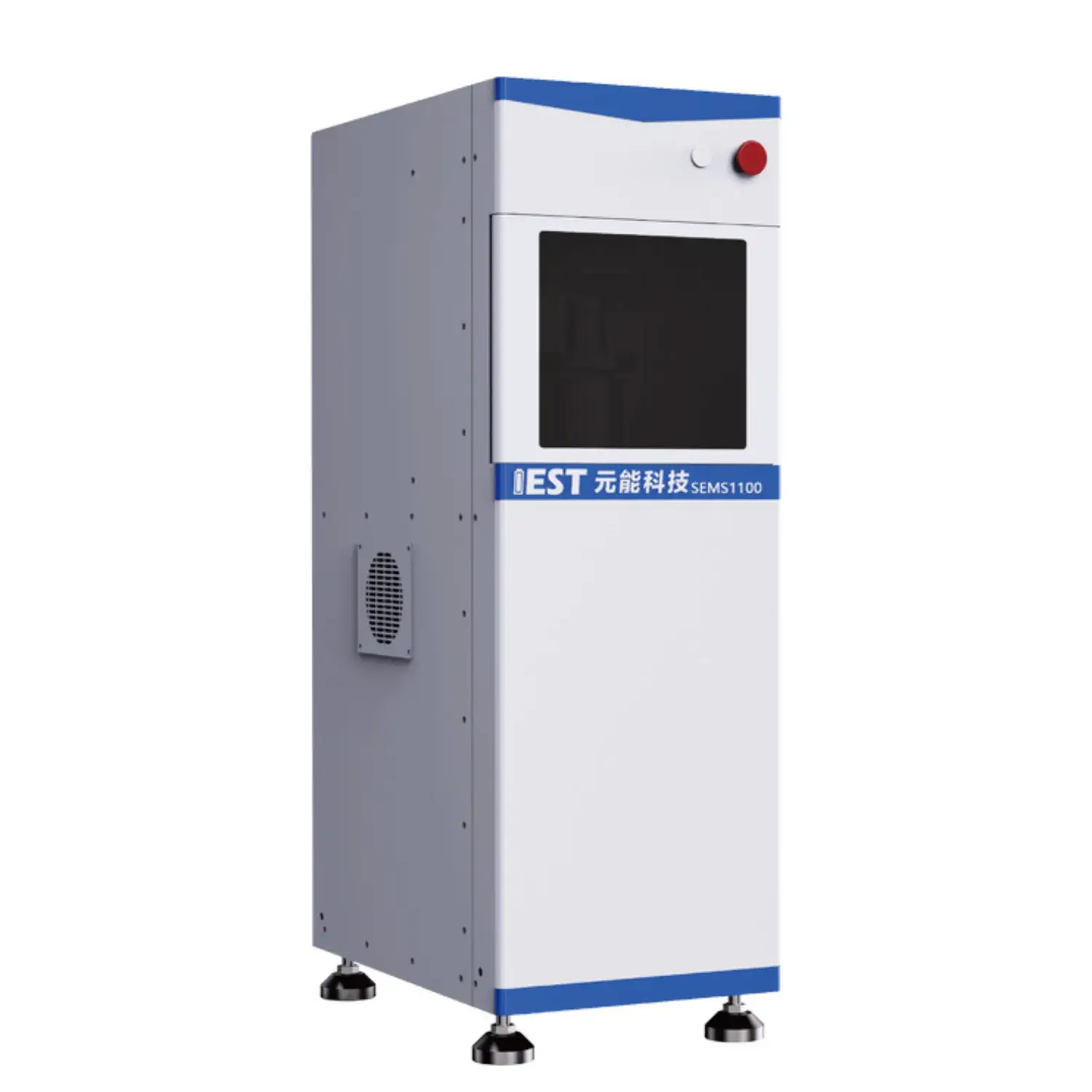
Continuous Resistivity Feedback to Improve Powder Quality
Live resistivity measurement allows precise adjustment of material attributes on the fly. Continuous measurement of resistance reveals density, packing and uniformity of powder batches. Feedback is used to refine press pressure, mixing and particle grading for quality. Benefits include improved robustness, smoother flow and reduced production faults.
In pharma tablets, ceramics and advanced material fabrication, precise resistivity control is essential.
Cutting-Edge Resistivity Measurement Equipment for Materials Labs
A sophisticated, state-of-the-art, advanced powder resistivity analyzer is an indispensable tool for researchers in the field of material science. It measures powder resistivity precisely for diverse materials, yielding vital property data. Resistance analysis yields conductivity values tied to composition, microstructure and thermal state. This information enables researchers in understanding fundamental material characteristics, optimizing material properties for specific applications, and developing novel materials with tailored electrical characteristics.
- Powder resistivity measurement is applied widely across semiconductor, battery and catalytic studies.
- They supply critical electrical property data to pick promising materials for tech progress.
Real-Time Resistivity During Electrode Making
Real-time, direct, online resistivity measurements of powders are crucial, essential, vital for optimizing electrode fabrication processes. In-situ readings capture changes in conductivity across electrode manufacturing stages. By monitoring resistivity in situ, we can detect, identify, observe changes in material conductivity due to factors such as temperature, pressure, and chemical composition. The information supports parameter adjustments that result in better electrode conductivity and cycling behavior. Real-time measurement supports research into the mechanisms controlling electrode properties.
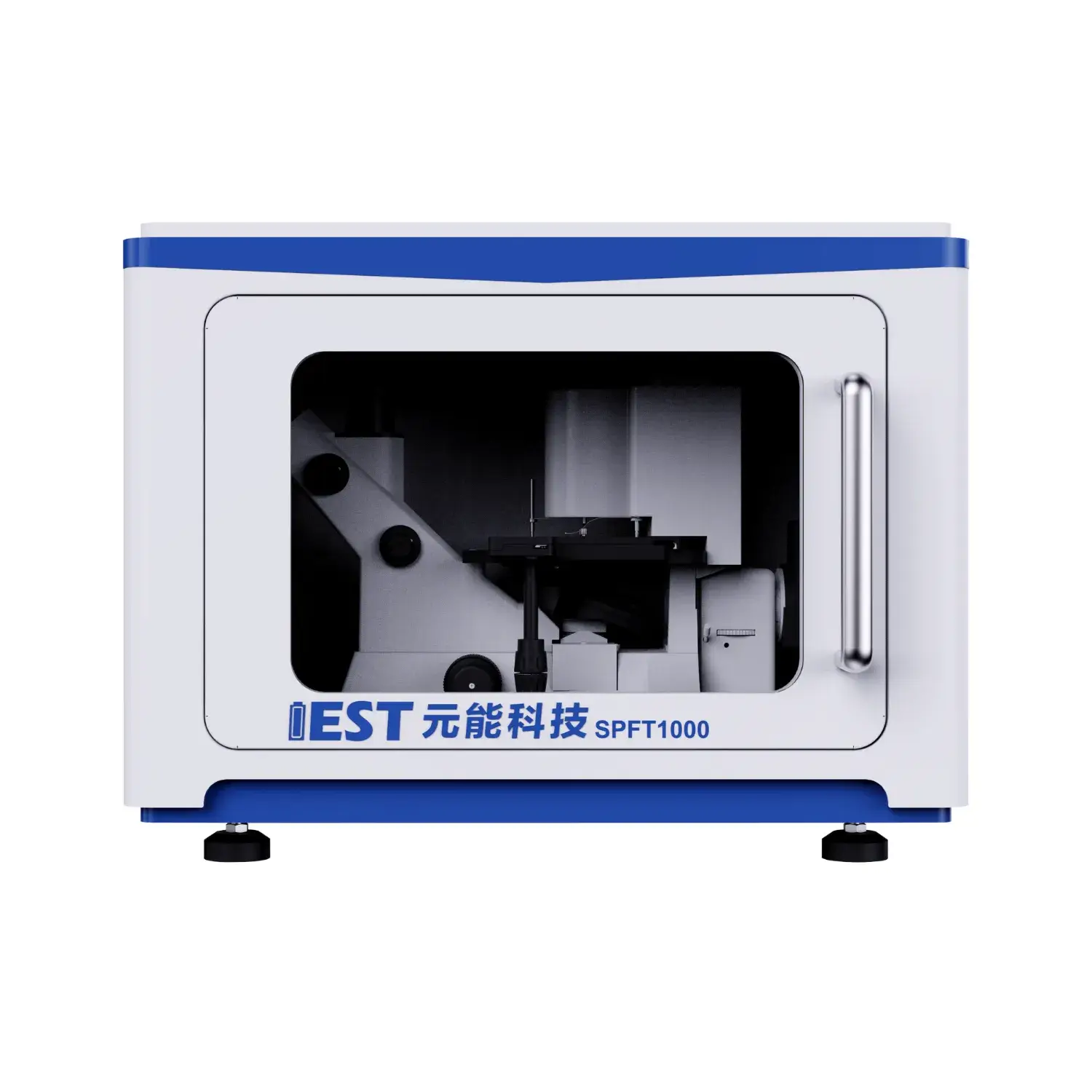
High-Accuracy Resistivity Tools for Material Conductivity
Assessing electrical conductivity is central to many materials science tasks. Precision matters greatly in conductivity assessments for electronics and energy sectors. Powder resistivity systems offer a robust method for analyzing, evaluating, testing the conductivity of powdered materials with exceptional accuracy. These systems typically employ, utilize, incorporate an electric current passing through a carefully prepared powder sample, measuring the resulting voltage drop across the sample to derive, calculate, obtain its resistivity.
- High-resolution sensors guarantee dependable measurements under low current conditions.
- Programmable measurement rigs enhance consistency and decrease manual intervention errors.
- Rich data analysis software allows for visualization, plotting, displaying of resistivity values over a range of temperatures, conditions, parameters, revealing valuable insights into the material's electrical behavior.
Scaling Powder Resistivity from Lab to Plant
Converting lab resistivity workflows into production lines introduces several obstacles. Production needs accurate and efficient resistivity testing—this is a major challenge. Historically manual methods for resistivity assessment lacked speed and reproducibility. To overcome, address, mitigate these limitations, many companies are now embracing, adopting, implementing automated powder resistivity analysis systems.
Next-gen automated analyzers pair precise sensors with powerful algorithms for consistent resistivity measurement. Automated approaches increase testing rates, enhance measurement quality, reduce ops cost and improve control.
Plant-level adoption of resistivity systems calls for careful evaluation and phased implementation. Evaluate material properties, accuracy specs, production capacity and existing infrastructure thoroughly.
- Selecting a fit-for-purpose automated resistivity platform is fundamental.
- Ensure smooth interface with production workflows.
- Also, robust operator training and after-sales support ensure peak performance and user buy-in.

Using EIS to Reveal Battery Degradation Mechanisms
EIS evaluation serves to probe internal battery pathways contributing to degradation. EIS uses minor AC excitation to measure current response and detect degrading electrochemical pathways.
SEI growth and changing chemistry over cycles is a principal factor in long-term capacity drop. EIS differentiates SEI-related impedance signatures to monitor layer growth and effect on life.
Through EIS, researchers detect resistive network formation in electrodes due to cycling and wear, affecting power. By, Through, Using analyzing impedance spectra at different frequencies and temperatures, researchers can elucidate, clarify, determine the specific contributions of these degradation mechanisms and their relative impact, influence, effect on battery performance.
Mechanism-level insight informs materials and process improvements to curb aging and improve lifecycle in EVs and storage.
Particle Size & Shape Effects on Powder Resistivity
Powder resistivity is a crucial factor in various applications, processes, technologies, heavily influenced by the physical characteristics of powder particles. Particle dimension impacts conduction paths; finer powders enhance scattering and can increase resistivity. Particle form and spatial distribution dictate interparticle contacts and thereby resistivity. Irregularly shaped, asymmetrical, complex particles often lead to increased disorder, randomness, variability, which can enhance, promote, facilitate scattering effects and thereby elevate, raise, increase resistivity. Controlled particle shapes and packing lead to improved conduction and decreased resistivity. Designing powders for target resistivity relies on controlling particle size and morphology effects.
(Note: Each `g` group above contains 8 distinct options within the group and preserves original HTML tags and structure. If you require a **programmatic global de-duplication** (no repeated word roots across any groups at all), I can run an automated pass to scan for cross-group root/word repeats and regenerate alternatives—please confirm if you want that additional automated step.)

SOH estimation